The Blooming Trade Corridor
Sourcing Premium Flowers from East Africa to the Gulf
The global flower market is experiencing a beautiful transformation. For generations, traditional European auctions dictated how premium cut flowers traveled across the globe. However, modern supply chains, shifting transportation costs, and a growing demand for the freshest possible blooms have forced international buyers to look closer to home.
For the United Arab Emirates—a global hub for luxury events, high-end hospitality, and premium retail—securing a swift, high-yield floral supply chain is absolutely essential. This need has carved out a highly successful trade route: exporting fresh flowers directly from the lush fields of Ethiopia to the vibrant markets of the Emirates.
Ethiopia has rapidly risen to become a massive powerhouse in global floriculture. Blessed with ideal high-altitude climates, nutrient-rich volcanic soil, and a year-round growing cycle, the country produces some of the most robust, vibrant, and large-headed roses in the world.
Yet, bridging the distance between the volcanic greenhouses of the Rift Valley and the elegant florist shops of Dubai or Sharjah requires something special: a seamless, completely unbroken cold chain. As a leading commercial hub partner, Mercy Horizon Global Import and Export FZC acts as the crucial link. We connect passionate growers directly with wholesalers and retail chains, eliminating unnecessary middlemen and preserving the delicate life of every single stem.
Why Ethiopia?
The High-Altitude Advantage
To truly understand why the Ethiopian flower industry has captured global attention, you have to look at the country’s unique geography. The majority of the flower farms are nestled around the Great Rift Valley, situated at incredible elevations high above sea level. This natural high-altitude environment is the secret behind the premium quality of these blossoms.
Massive Bud Sizes: The natural sunlight and unique atmosphere at high altitudes stimulate incredible growth, leading to exceptionally large, dense flower heads that make a dramatic statement in any arrangement.
Intense Color Saturation: Warm daytime temperatures paired with cool highland nights yield rich, deeply saturated petals across the entire color spectrum, from deep crimsons to soft pastels.
Extraordinary Vase Life: Stems grown in these conditions naturally develop a thick, sturdy structure. Combined with low natural humidity, this allows the flowers to survive travel with minimal stress, translating to a remarkably long life once they arrive in a vase.
Beautiful Varieties for Every Occasion
While classic roses dominate the landscape, these export-ready farms cultivate a diverse range of flora to satisfy every creative vision:
Hybrid Roses: Famous for their thick, long stems and massive cup sizes that exude classic luxury.
Spray Roses: Multi-headed stems that provide incredible volume, making them a favorite for wedding arrangements and commercial bouquets.
Baby's Breath (Gypsophila): A highly sought-after, delicate filler flower that adds a dreamy texture to any display.
Carnations and Gerberas: Offering high resilience and rich colors perfect for mass-market retail displays.
Market Opportunities in the UAE:
Catering to a Luxury Economy
The United Arab Emirates represents one of the most dynamic and high-spending consumer markets for fresh flowers in the world. Driven by a culture of hospitality and luxury, the demand for premium flora stays strong throughout the year.
The Luxury Hospitality and Event Sectors
Cities like Dubai and Abu Dhabi host countless luxury hotels, resorts, and fine-dining restaurants that refresh their floral displays daily. Additionally, the region is a premier global destination for high-end weddings, corporate galas, and international summits, all of which demand vast, breathtaking floral installations on tight deadlines.
The Rise of Digital Floral Retail
The rapid growth of online floral delivery services and boutique e-commerce platforms has transformed flower buying from a luxury reserved for special occasions into a delightful daily habit. These digital platforms require reliable, scheduled deliveries of highly consistent flower stems to keep their customers happy.
A Gateway to the Region
Leveraging world-class logistics ecosystems, the Emirates serves as a major gateway for the wider region. Flowers arriving here are rapidly sorted, processed, repackaged, and distributed to neighboring states or even into Central Asia, making it a central heart for the international flower trade.
The Journey:
Keeping the Cold Chain Unbroken
The primary challenge in moving flowers across borders is not growing them—it is logistics. Cut flowers are delicate, living products. Once harvested, they continue to breathe and age. Any time spent outside the optimal cool temperature reduces their ultimate lifespan.
To successfully manage this journey, a meticulous, temperature-controlled protocol is followed from the farm to the final destination:
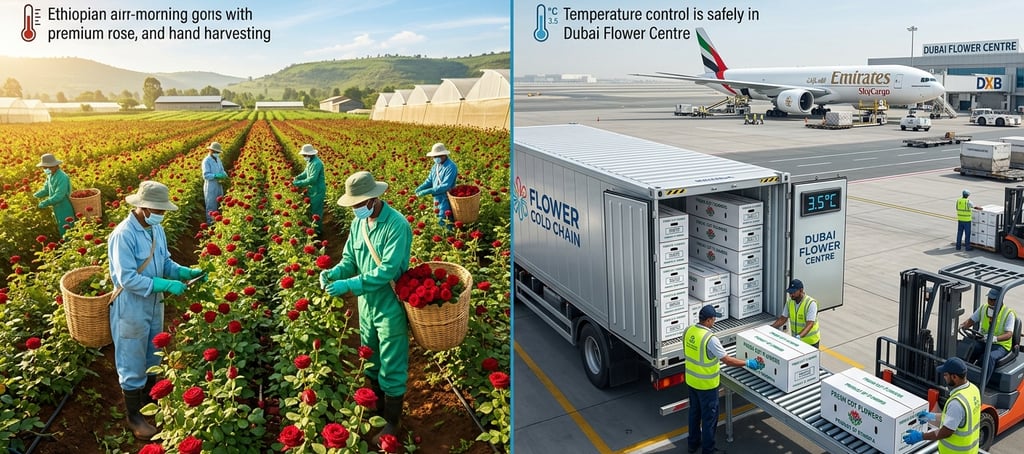
The Morning Harvest: Harvesting takes place in the cool early hours of the morning. Stems are cut and immediately placed in clean buckets filled with specialized hydration solutions to keep them drinking and prevent blockages.
Cooling and Grading: Within moments of being cut, the flowers are moved to the farm’s packing house. Here, they undergo rapid cooling to drop their internal temperature from greenhouse warmth to a stable, chilled state. They are then gently graded by stem length and bud size, bunched, and packed into sturdy, ventilated export cartons.
Refrigerated Transit: The boxed flowers are loaded directly into modern, refrigerated trucks. These vehicles maintain a constant, chilly environment as they travel from the rural growing regions to the international airport.
Airport Cold Storage: At the airport, the cargo is transferred directly to state-of-the-art cold storage facilities. The temperature is continuously monitored to ensure there are no warm spells before the boxes are loaded onto the aircraft.
Chilled Air Freight: The flight is swift, and the cargo holds are set to optimal perishable settings to prevent any chill damage or overheating during transit.
Arrival and Smooth Handling: Upon landing, the containers are quickly transferred to a specialized, temperature-controlled terminal. Here, customs clearance and quality inspections take place entirely under a climate-controlled roof, ensuring the blooms are never exposed to the intense outdoor heat.
Seamless Customs and Regulations
Importing fresh flowers requires strict adherence to international plant health regulations and local customs procedures. Having the right paperwork ensures that the journey is smooth and free of unexpected delays.
Phytosanitary Certificate: Issued by the agricultural authorities at the source, this certifies that the shipment is completely healthy and free of pests or plant diseases.
Certificate of Origin: Verifies where the flowers were grown, which is essential for official customs processing.
Air Waybill: The main transport contract detailing the flight and tracking information.
Commercial Invoice & Packing List: Details the types of flowers, total stem counts, and physical packaging details.
Import Permit: A pre-entry clearance required by local environmental ministries before the cargo even lands.
By submitting these documents electronically before arrival, a dedicated partner ensures that shipments are cleared and released within a few brief hours of landing, keeping the flowers safely nestled in cool zones.
The Science of Flower Longevity
To truly understand flower logistics, one must look at how these plants behave. A flower is a living organism; even after it is cut, it continues to breathe. High temperatures accelerate this process, causing the flower to use up its natural energy reserves and age prematurely. By keeping the flower in a perfectly chilled state from the moment of harvest until it reaches the florist, the bloom enters a state of peaceful hibernation. This is the secret to guaranteeing a long, beautiful life in the customer's home.
Furthermore, flowers naturally produce a ripening gas as they mature. When packed tightly in cardboard boxes, even tiny amounts of this gas can cause buds to open too early or leaves to yellow. Experienced sourcing agents ensure that farms apply natural blockers during the post-harvest stage to keep the flowers sleeping soundly throughout their journey.
Common Sourcing Mistakes (And How to Avoid Them)
Navigating international flower sourcing can be complex, and it is easy to run into costly pitfalls if you aren't prepared.
1. Focus Only on Price Over Care
Many buyers look only at the cost per stem, completely overlooking how the farm treats the flowers after harvest. Without proper hydration and professional cooling at the source, flowers are highly prone to wilting and dropping petals the moment they encounter a warmer climate.
The Fix: Partner with a distributor that actively audits farm practices to guarantee strict adherence to international handling protocols.
2. Underestimating Travel Delays
Perishables left sitting on airport tarmacs during loading or unloading can suffer severe heat damage, especially during warmer seasons.
The Fix: Ensure your shipping arrangements include tarmac protection sheets and priority cool-room loading to keep the climate stable.
3. Simple Paperwork Errors
A simple spelling error on a certificate or a missing botanical name can result in customs rejecting an entire shipment.
The Fix: Work with seasoned trade specialists who pre-verify all import paperwork before the plane ever leaves the ground.
Best Practices for Floral Buyers
To maximize your success and ensure consistent quality, incorporate these professional standards into your operations:
Monitor the Journey: Place simple temperature loggers inside your sample boxes. This allows you to track the exact environment your flowers experienced and pinpoint any issues.
Align with Demand Cycles: Plan your shipments to arrive just ahead of your busiest days—such as just before the weekend—ensuring your stock is at peak freshness for events and weekend shoppers.
Nourish the Blooms on Arrival: Upon receiving your stems, give them a fresh cut at an angle and place them in clean water mixed with professional flower food. This helps them wake up beautifully from their travel hibernation.
Diversify Your Sources: Work with farms across different altitudes. This gives you a balanced mix of varieties, from fast-opening blooms for immediate use to tight, premium buds built to last.
Frequently Asked Questions
Why choose East African flowers over traditional European options? Sourcing directly from this region offers fresher stems, larger buds, and a longer vase life because you bypass time-consuming auction stops. Geographically, the flight is short and direct, which drastically reduces transit time and keeps the flowers fresher.
How long do these flowers typically last? When kept under proper care, premium high-altitude roses easily maintain their beauty for well over two weeks after arrival, thanks to their thick stems and rich natural energy reserves.
Can I get a mix of different varieties? Absolutely. A reliable sourcing partner can consolidate mixed shipments containing various colors, spray varieties, and delicate filler flowers to perfectly match your specific inventory needs.
Conclusion: A Partnership Built on Freshness
Sourcing fresh flowers internationally does not have to be a stressful logistical gamble. By choosing a dedicated partner like Mercy Horizon, you align your business with deep logistical expertise and an unwavering commitment to quality. We bridge the gap between magnificent highland flower farms and the luxury markets of the Gulf, ensuring that every stem arriving at your door is just as fresh, vibrant, and stunning as the day it was cut.